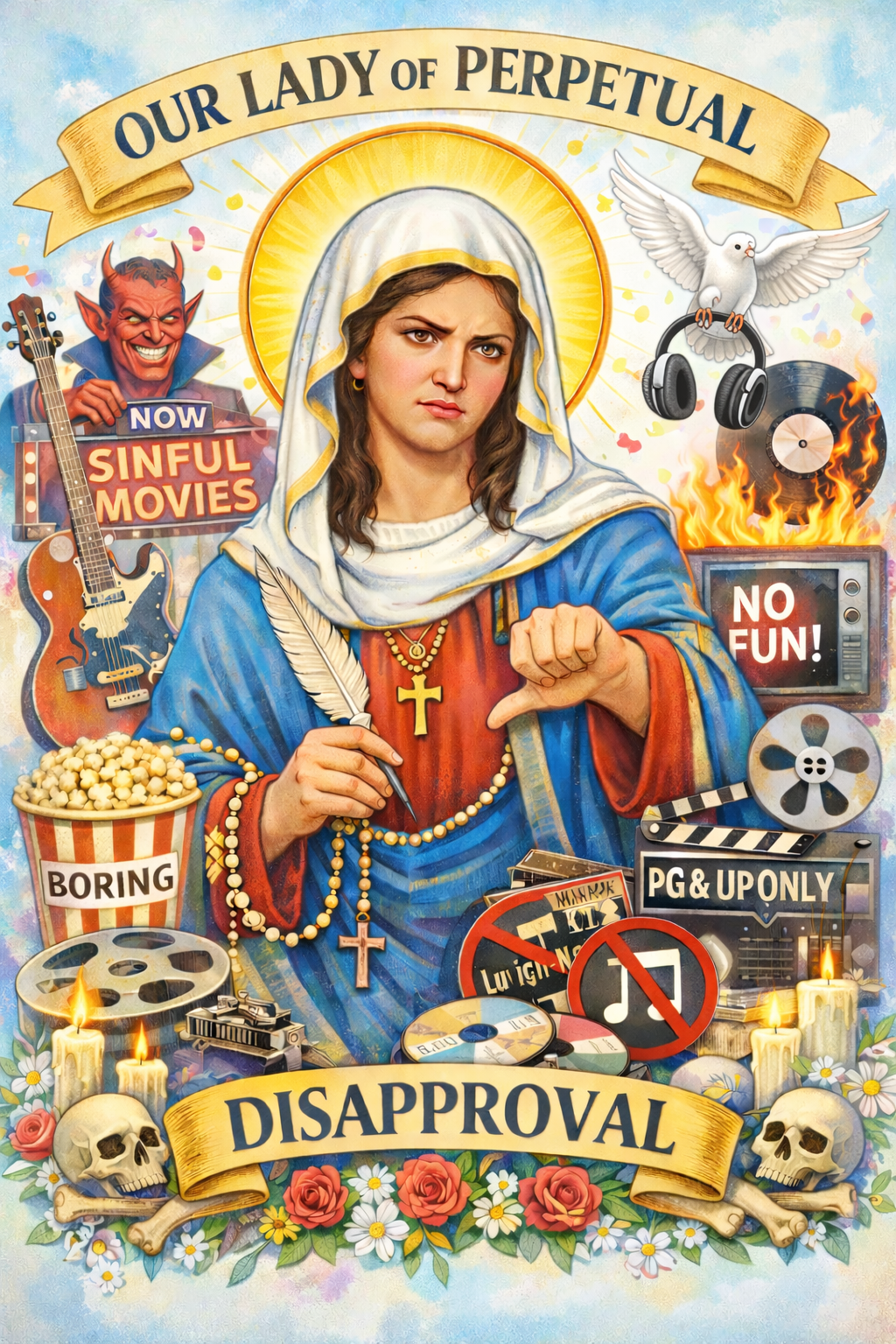
I grew up in the 90s, which means I could MMMBop and teeny-bop with Olympic-level commitment. My mom tried to instill good Christian values, but behind closed doors, I performed choreographed routines to Britney, Christina, and Destiny’s Child like my eternal salvation depended on it. I was absolutely certain I would marry a Backstreet Boy or, if necessary, settle for a member of *NSYNC.
Every other weekend, I visited my dad. There, I was allowed to watch movies above my pay grade. Some terrified me. Some confused me. Most felt deliciously forbidden. It was our thing—this shared cinematic rebellion—especially when we didn’t have much else in common. Nothing bonds a father and daughter like watching something your mother explicitly said not to.
Eventually I outgrew my pop-star wedding fantasies, but I never outgrew the nostalgia. A few bars of a familiar song could transport me back to a simpler time. Movies became my adult pacifier. After two babies and countless sleepless nights, vegetating on the couch stopped being a luxury and started feeling like oxygen.
Houston, we had an addiction.
Then I became Catholic. Suddenly, my Spotify playlist needed an examination of conscience. The lyrics I once belted in the car felt… sticky. Suggestive. Hollow. The Catechism teaches that we are called to purity of heart and that modesty protects the mystery of the person (CCC 2518, 2521–2522). When you start believing the human body is sacred, redeemed, and destined for resurrection, it becomes harder to casually consume content that treats it like a prop.
Movies didn’t hit the same either. Everything seemed to orbit around drugs, murder, or sex—preferably all three before the opening credits. The Catechism reminds us that scandal and cooperation with sin are real things (CCC 1868). Formation matters. What we repeatedly consume shapes what we desire. And desire shapes destiny.
Here’s the craziest part: most modern entertainment catechizes more aggressively than the Church does. It tells us what love is. What freedom is. What happiness is. It preaches a gospel of self-expression without self-gift, pleasure without responsibility, and power without sacrifice. And if the liturgy is meant to form us in truth and beauty, then our screens are forming us too, just in a different direction. That was the uncomfortable realization.
The Church teaches that beauty leads us to God (CCC 2501). Real beauty awakens wonder, enlarges the soul, and orders our loves correctly. Once I tasted that through the Mass—incense rising, Gregorian chant trembling, heaven touching earth—a lot of entertainment started to feel like cotton candy when I’d been invited to a wedding feast.
St. Paul writes, “Do not be conformed to this world, but be transformed by the renewal of your mind” (Romans 12:2). Transformation means some things stop fitting. Now when I scroll endlessly, I can almost hear the Holy Spirit whisper, “Is this making you more alive? Or just less aware?”
Ironically, Catholicism didn’t make me less joyful. It made me harder to numb. And in a culture that runs on distraction, dopamine, and “Netflix and chill,” choosing transcendence over anesthesia feels almost scandalous.
So yes. Catholicism ruined music and movies for me. But it gave me something better: a heart less easily entertained and more capable of heaven.
If this reflection blessed you, you can support the mission here:


 The Crazy Catholic
Leave a comment