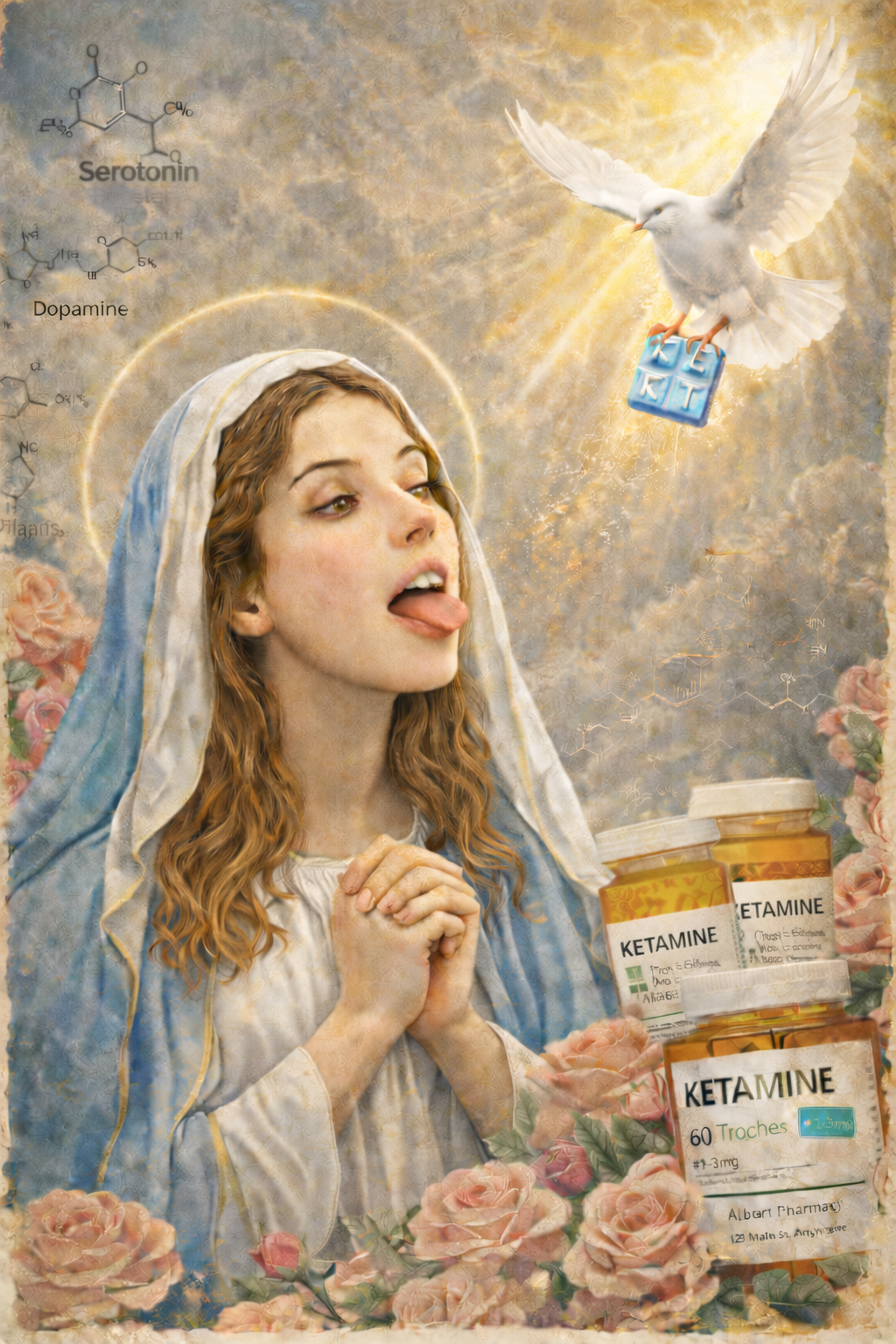
There is a particular loneliness to being a faithful Catholic and still being sick.
I’m a convert, wife of over fifteen years, and a mother of two small children who need snacks, socks, and sanctification before 8 a.m. I’ve also lived with anxiety and depression since childhood, and in 2014 I was diagnosed with bipolar disorder type II. I’d been off medication since 2019, determined to “offer it up,” to pray harder, to believe bigger.
And I did.
- Confession.
- Weekly Mass.
- Daily Rosary.
- Deliverance prayers.
- Scripture before sunrise.
The Church teaches that grace builds on nature (CCC 2001). But grace does not erase nature. And sometimes nature—specifically brain chemistry—needs help.
Recently, after unusual symptoms like sleep paralysis, neuropathy, and phantom tastes and smells, I learned my depression was manifesting in a strange neurological way. After resisting for years, I began low-dose ketamine under medical supervision. I’m not thrilled to be back on medication. I’ve tried over a dozen in the past. But this one has been, quite honestly, a gift.
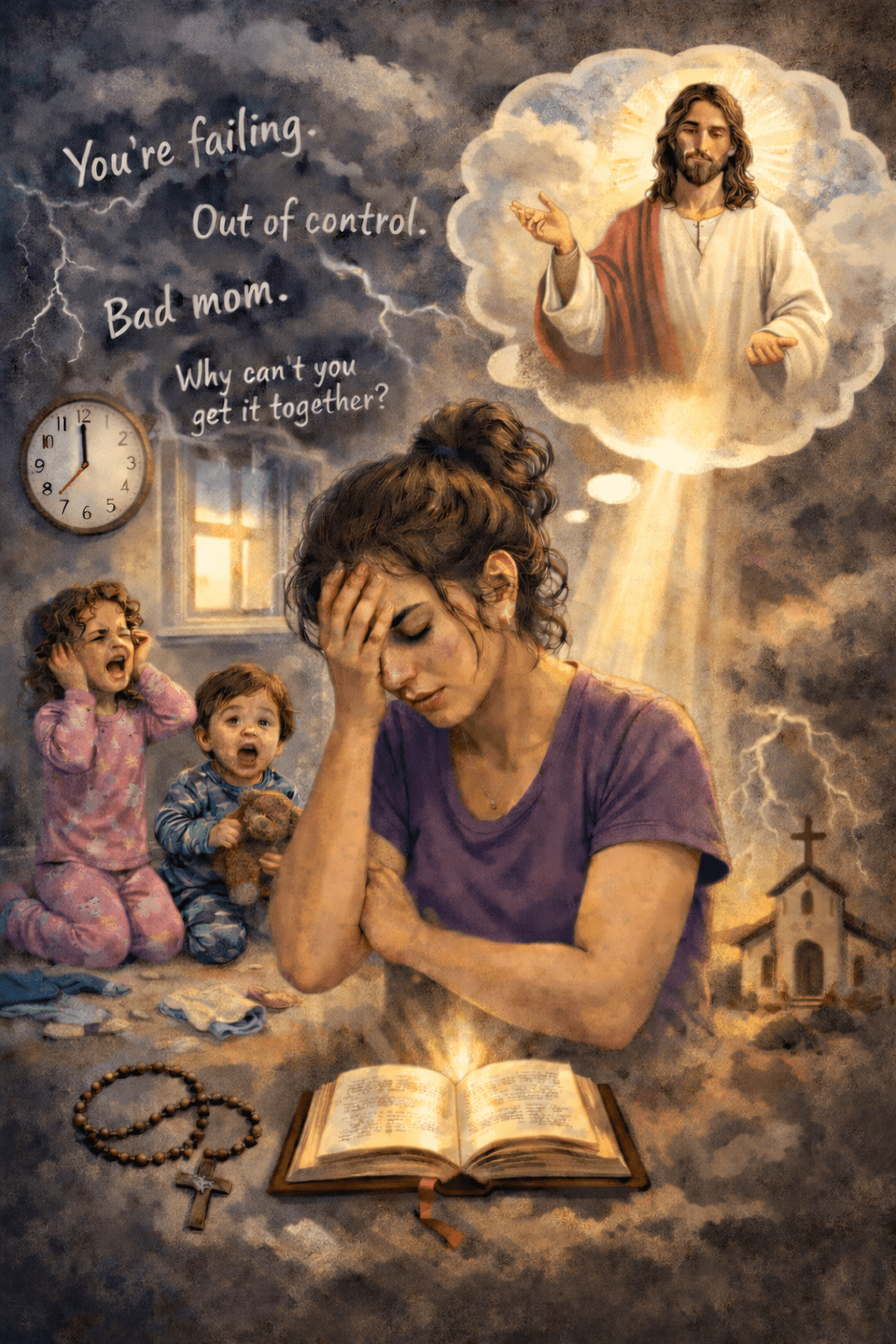
For a while, I felt like a bad Catholic. If I were holier, wouldn’t God heal me? If my faith were pure enough, wouldn’t the darkness subside?
The Catechism reminds us that illness can have physical causes and requires appropriate care (CCC 2288). Seeking medical treatment is not a failure of trust in God, it is often cooperation with His providence. St. Luke, after all, was a physician.
If I had diabetes, I would take insulin. If I had cancer, I would accept chemotherapy. Why is a neurotransmitter deficiency any different?
The Church has never taught that mental illness is a moral defect. In fact, psychological disturbances can diminish personal culpability (CCC 1735). We are embodied souls. The brain is not separate from the spiritual life—it is part of it.
Our Blessed Mother, immaculately conceived and free from sin, still endured profound sorrow. The prophecy of Simeon, “and a sword will pierce through your own soul also” (Luke 2:35), was not erased by her holiness. Suffering is not always punishment. Sometimes it is participation.
Mary’s Assumption reminds us that the body matters. God does not discard flesh—He glorifies it. That includes the fragile, inflamed, misfiring brain.
Medication is not my savior. Christ is. But sometimes Christ saves through a psychiatrist’s prescription pad.
If you are a Catholic struggling with anxiety, depression, bipolar disorder, or other mental health challenges, hear this: You are not less faithful. You are not spiritually defective. You are not failing God.
You are sick. And sickness deserves care.
Pray the Rosary. Go to Confession. Receive the Eucharist. And if necessary, take the medication. Grace and serotonin are not enemies. They are both gifts. And God is not disappointed in you for needing either.
If this reflection blessed you, you can support the mission here:



 The Crazy Catholic
Leave a comment